
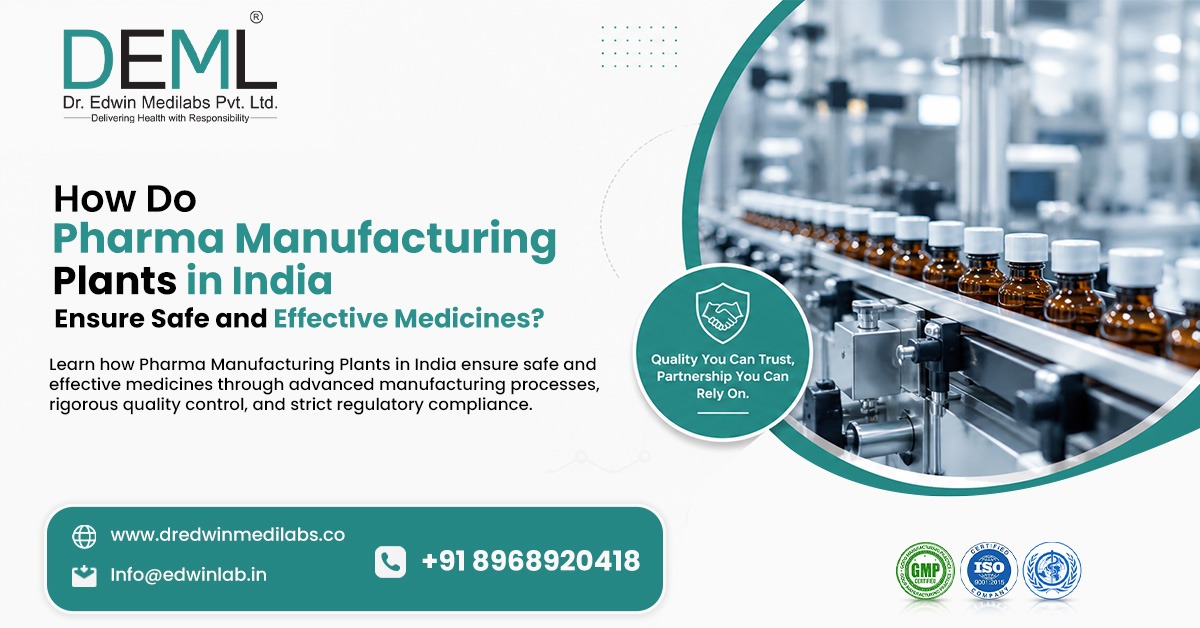
Are you searching for the most efficient way to market your healthcare brand via totally safe drugs? There are countless questions related to how the most productive facilities are capable of keeping absolutely pure conditions among thousands of complicated pharmaceutical batches. The truth is that the secret of maximum product stability depends on a highly sophisticated pharma manufacturing plant in India & strict laboratory quality control.
The following analysis explains in detail the best methods of creating the safest possible conditions for manufacturing your drug formulations in India.
What Is a Pharma Manufacturing Plant?
A pharma manufacturing plant in India is a highly specialized factory where highly skilled technicians create medicines based solely on chemical raw materials. As a result, pharmaceutical plants have to comply strictly with international safety laws for protecting the general public.
- Maintains Sterile Environment: Specialized air handling units keep manufacturing areas sterile from the smallest dust particles.
- Maintains Humidity Levels in the Room: The modern climate control system keeps relative humidity levels to prevent the destruction of powdered drugs.
- Runs through Robotics: There are conveyor belts and robotic arms used in mass manufacturing.
- Maintains Quality Control: Techniques of isolation in manufacturing are implemented to ensure that there is no cross-contamination.
- Keeps Reference Samples: Laboratories collect and keep samples from all batches to use for further testing.
Thus, organizing a full-fledged factory requires an immense initial capital expenditure of at least ₹10 crore to ₹50 crore in the national Indian market.
Stages of Pharmaceutical Manufacturing Process
Raw Chemical Ingredients Sourcing
To begin with, specialized procurement experts obtain completely undisturbed chemical substances from trusted foreign suppliers. Then, laboratory staff carefully conduct rigorous tests on all raw materials incoming into the factory to ascertain their identity and composition.
Precise Formula Compounding
Afterwards, professional manufacturers weigh and mix the active chemical molecules using heavy machines called blenders. This procedure requires precision since every dose is to contain the proper amount of medicine.
Automated Dosage Forms Processing
Finally, machines manufacture products out of the mixed ingredients. These machines automatically transform loose powders into solid dosages by forming tablets or filling liquid dosages into glass bottles.
Secondary Bottling Under Industry Standard
At the same time, computers manipulate the packaging process where products are packaged into protective aluminum foil or glass vials. This technique actively protects products from damaging light, wetness, and accidental breakages during transportation.
Quality Control of Pharmaceutical Manufacturing Plants
Current Quality Management Methods
Today’s pharmaceutical manufacturing plants base their quality control strategies on laboratory tests rather than simple visual examinations. Quality control laboratories utilize advanced equipment to test the condition of each component before reaching end consumers. Partnering with a WHO-GMP Certified Manufacturing Company in India helps ensure that medicines are produced according to recognized quality and compliance standards.
Phase of Quality Control Tests
| Phase of Quality Control Tests | Main Objectives of Tests | Indian Safety Standards |
|---|---|---|
| Active Ingredients Assay | Test whether raw chemicals are really pure. | Must fully conform to international pharmacopoeia standards. |
| Tablet Dissolution | Test how quickly a tablet dissolves in fluids. | The test makes sure the tablet works instantly after taking it. |
| Microbial Limit Check | Test whether a batch has any microbial contamination. | The test guarantees the absolute sterility of a batch. |
| Accelerated Stability Study | Test the shelf life of pharmaceuticals in extreme conditions. | The test confirms that drugs are suitable for all Indian regions. |
Advanced Technologies Used in Pharma Manufacturing Plants in India
Advanced Air Handling Equipment
Current factories utilize sophisticated HVAC systems with advanced HEPA filters to prevent contaminated air from compromising production batches. A well-designed pharma manufacturing plant in India relies on these automated layouts to meet international safety laws.
Computerized Raw Material Stock Control
Today’s plants use highly sophisticated computer networks for managing and tracking the progress of the whole supply chain of raw materials. This real-time automation helps modern pharma manufacturing companies run flawless workflows.
Automated Inspection with Industrial Vision Sensors
High-resistance camera devices on an electronic level are able to watch the packaging line, thus recognizing any irregularities immediately. Therefore, defective blisters, broken pills, and incorrect labeling are automatically eliminated from manufacturing at once.
The State-of-the-Art Compression Equipment
State-of-the-art rotary tabletting equipment is able to process a huge number of pills at once evenly and uniformly. Many scaling brands partner with large pharma manufacturing companies specifically to access this high-speed output capacity.
Sterile Vacuum Powder Pipes
Finally, special pneumatic transport systems deliver powdered chemical components between processing stages without letting them interact with air. This technology allows a state-of-the-art drug manufacturing plant to stay completely clean and eliminate airborne dust.
How to Evaluate a Pharma Manufacturing Plant in India
- Global Industry Accreditations: First of all, customers need to check whether the factory possesses all the necessary international accreditations.
- Facility Automation: Secondly, clients should make sure that the plant uses advanced processing systems instead of old-fashioned manual equipment.
- Laboratory Testing Capabilities: Thirdly, it is crucial to verify whether the facility has an industrial lab for testing the batches in real-time.
- Monthly Production Capacities: Fourthly, clients have to know whether the factory can easily increase monthly manufacturing output.
- Regulatory Compliance Records: Lastly, it is recommended to check whether the plant has ever received recalls due to quality issues.
Before selecting a manufacturing partner, businesses should evaluate certifications, production capacity, quality systems, and compliance records. You can also read our guide on How to Choose a Pharma Third Party Manufacturing Company for additional selection criteria.
Why Dr. Edwin Medilabs Is a Trusted Manufacturing Partner
Seven Years of Practical Experience
Since our company was founded in 2014, we have acquired invaluable knowledge of the manufacturing processes. We can solve complex formula problems effectively while maintaining the superb quality of all products.
Modern Highly Equipped Manufacturing Plants
Our advanced drug manufacturing plant features cutting-edge automated production equipment in highly sterile conditions. We manufacture enormous quantities of commercial orders in the most sterile conditions, far beyond ordinary regulations.
Production of Multi-Segment Formulations
Furthermore, our company manufactures thousands of highly effective formulations in multiple product categories. Our production lines produce tablets, hard capsules, pediatric syrups, oral liquids, and topical ointments efficiently.
Compliance with Elite Quality Control Standards
Our entire product range passes rigorous quality controls according to WHO GMP, ISO, and FDA GLP standards. Thus, we ensure superb quality of all our products and help our clients to enter lucrative foreign export markets using compliant pharmaceutical manufacturing plants.
Low Manufacturing Investment Barriers
Last but not least, we help young pharmaceutical brands to enter the market with low initial investment barriers. Our partners get highly valuable formulations at low prices to maximize profits.
Conclusion
To summarize, modern pharma manufacturing plant in India create safe products with sophisticated cleanrooms, automated manufacturing lines, and elaborate laboratories. With our help, you will significantly reduce factory setup expenses and produce premium-quality products.
Choosing an experienced company like Dr. Edwin Medilabs with all the relevant accreditations will provide you with access to more than 4,000 formulations. Feel free to get in touch to enhance your pharmaceutical production pipeline.
Frequently Asked Questions (FAQs)
What kinds of air filtration do modern pharma factories use to prevent batch contamination?
Modern pharmaceutical factories feature highly advanced HEPA filters for removing 99.97 percent of airborne particulates. Moreover, they keep strict positive air pressure to prevent cross-contamination.
How do modern drug manufacturing plants implement proper cleaning for new product lines?
Pharmaceutical specialists perform thorough cleaning with purified water and appropriate solvents in all contact areas. After that, chemical laboratories conduct extremely sensitive swab tests in order to check whether everything is ready for production.
What is the main purpose of dissolution studies in pharmaceutical laboratories?
The dissolution study reveals precisely how long a tablet takes to dissolve inside human gastric fluids. This crucial laboratory test ensures the proper functioning of the medicinal product.
Why do modern factories force staff members to wear gowns and other protective clothes?
People continuously shed millions of particles during regular factory activities. That is why it is essential to wear protective suits to avoid batch contamination.
How do pharmaceutical manufacturers ensure accurate capsule dosage?
Modern pharmaceutical manufacturing facilities use automated checkweighers to verify the weight of each capsule during production. Capsules that do not meet predefined dosage specifications are automatically rejected, ensuring consistent quality, accuracy, and patient safety.
What storage conditions are used in the modern pharmaceutical factories to store sensitive liquid formulations?
Cold rooms with automatic alarms are kept at constant temperatures from 2 to 8 degrees Celsius. This continuous temperature control prevents decomposition of active proteins during storage.
How do modern factories prevent data alteration in computer-based materials management systems?
Modern factories implement highly secure information systems with personal access passwords. Moreover, electronic audit trails document all data changes made within a particular product batch.
How do factories handle failed chemical tests?
The entire batch should be quarantined for performing an in-depth root cause analysis. Only after this procedure will all faulty batches be destroyed safely.